Cart
0

Looking for the best oil for very dry black skin? If you have black or mixed skin, you know how much of a daily battle dryness can be. Tightness, dull skin, ashy patches, legs that turn white after the shower, rough elbows… and sometimes, even with a good cream, nothing seems to be enough.
It's no coincidence: black skin has very specific needs, and not every oil is a good fit. Chosen well, an oil can make a real difference: skin feels more supple, more comfortable and looks more radiant.
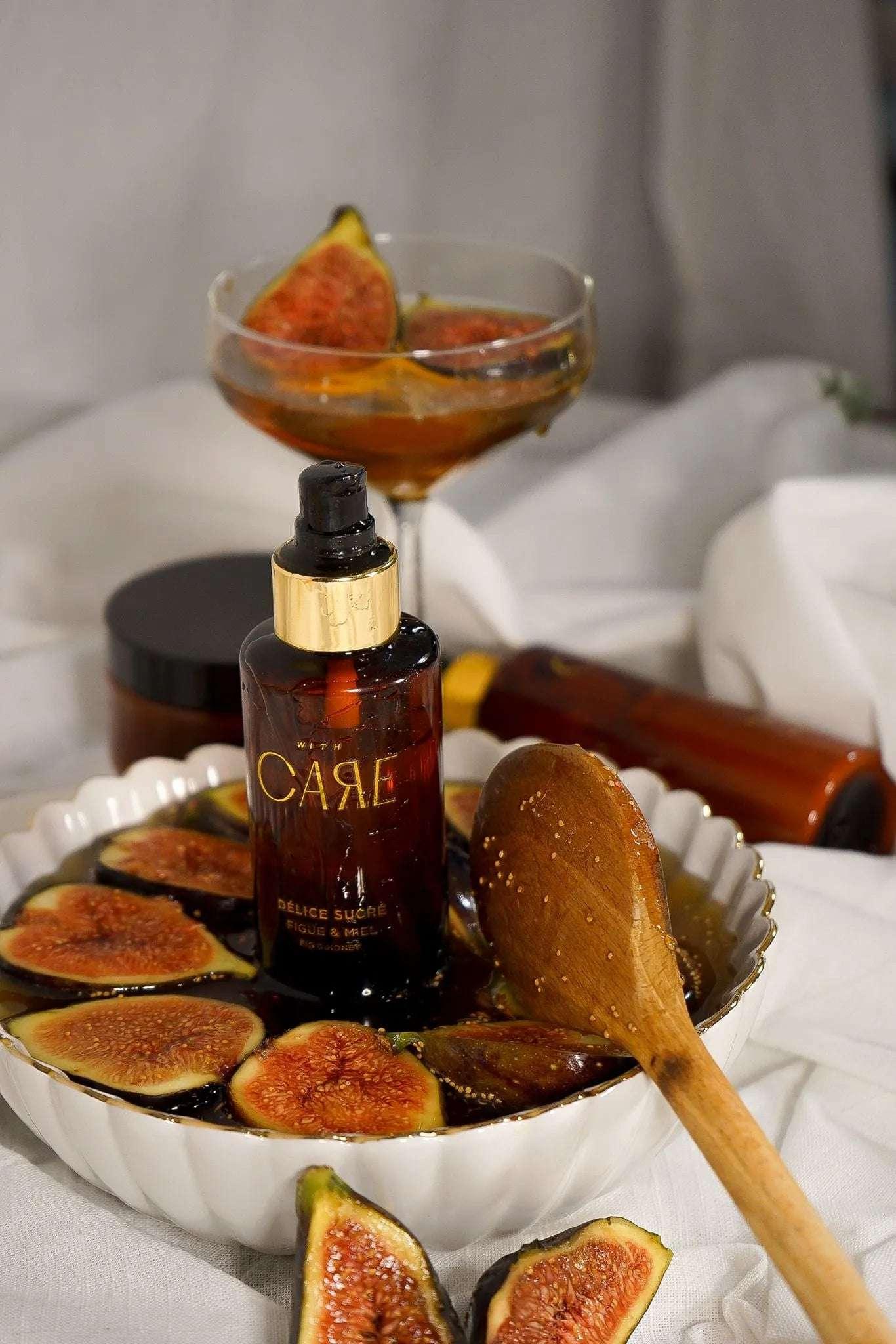
That's one of the reasons brands focused on these skin types, like WITH CARE, put specific oils such as grape seed oil at the heart of their formulas, to offer nourishment that truly respects the needs of black skin.
Let's look at which oils really work.
Why is black skin often very dry?
Black skin:
Can lose moisture more quickly
May contain fewer protective ceramides
Looks dull when the skin barrier is weakened
Can make uneven-looking areas more noticeable when it's dry
Doesn't handle hot showers and harsh shower gels well
So it's skin that needs water + lipids + protection.
Oils play a key role, as long as you choose the right ones.
The best oils to moisturize very dry black skin
1. Grape seed oil: lightweight and easy to use every day
Light, fast-absorbing and comforting: a lovely oil for black skin.
It:
absorbs quickly,
leaves skin feeling very supple,
gives skin a healthy-looking glow,
helps support the skin barrier,
leaves skin feeling comfortable,
helps reduce the ashy look.
It's a star oil in high-end skin care… and the one WITH CARE uses in its scented body oil, for a simple reason: it's light and suits most skin types, including sensitive skin.
2. Shea butter: the most nourishing
Rich, protective and comforting.
A must for very dry skin:
deeply nourishes
helps support the skin barrier
helps protect against the cold
softens rough areas
Ideal at night or in winter.
3. Sweet almond oil: the most comforting
It quickly comforts:
tight-feeling skin,
rough areas,
dry, flaky patches,
persistent dryness.
Great for dry, atopic-prone or reactive skin (patch test first if your skin is sensitive, and avoid it if you have a nut allergy).
4. Coconut oil: the most occlusive (use with care)
It holds in moisture very well, but should be used:
on damp skin
at the end of your routine
in small amounts
It shouldn't replace your moisturizer; use it as the last step to seal everything in.
5. Avocado oil: the richest in essential fatty acids
Perfect for:
very dry legs
rough areas
skin that cracks in winter
Very nourishing, thick and protective.

Which oil should you choose for your needs?
Need |
Best oil |
Very dry skin |
Grape seed + shea |
Dull-looking skin |
Grape seed or avocado |
Rough, dry elbows and knees |
Sweet almond + shea |
Sensitive skin |
Jojoba or sweet almond |
Dry skin with keratosis pilaris |
Grape seed (lightweight) |
Ashy skin |
Grape seed |
The secret: oil alone is never enough
A very common mistake: using only an oil to moisturize.
It can't do the job on its own.
Oil nourishes, but it doesn't hydrate. Black skin needs:
Hydration (body lotion)
Nourishment (oil or butter)
Protection (a lipid layer)
That's what WITH CARE offers: a complete routine that first brings water (body lotion), then seals it in with a high-quality plant oil.
A complete routine for very dry black skin
In the morning
Gentle, sulfate-free shower gel
Grape seed or sweet almond oil
SPF on exposed areas
In the evening
Shower
Hydrating body lotion
Shea butter body butter
Twice a week:
Gentle body scrub (not abrasive!)
Conclusion
Very dry black skin needs the right care, and not all oils are equal. The best options remain:
grape seed oil
sweet almond oil
avocado oil
Used in the right routine, they leave skin feeling more supple and softer, and looking more radiant.
That's exactly why WITH CARE builds its body care around plant oils suited to black skin, like grape seed oil: lightweight, effective and well suited to dry skin.
Written by Aissatou, a nurse for more than 10 years and founder of WITH CARE.