Cart
0

Is shea butter bad for your skin? For centuries, shea butter has been treasured as a go-to ingredient for skin and hair. Still, more and more people are wondering whether it carries any real risk. Between rumors, bad experiences and confusion about quality, the topic deserves a clear answer.
At WITH CARE, we believe transparency and knowledge are the best ways to take care of yourself, with confidence, gentleness and responsibility.
Shea butter: a natural treasure with many benefits
Where does shea butter come from?
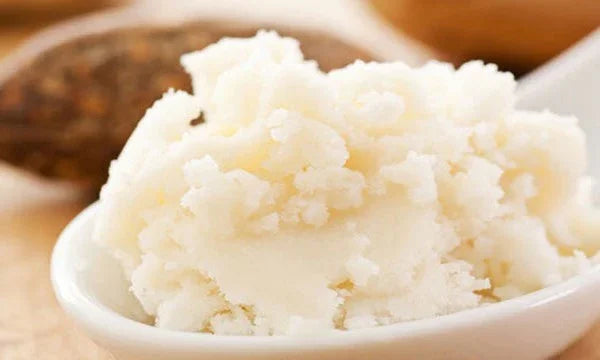
Shea butter is extracted from the nuts of a West African tree, Vitellaria paradoxa. Rich in fatty acids and vitamins A and E, it helps nourish skin, supports its natural barrier and leaves it feeling soft and comfortable.
Its benefits for skin and hair
Deep moisture: it helps support the skin's moisture barrier.
Comfort: it helps relieve the feeling of tightness and dryness.
Protection: it helps shield skin from cold, wind and moisture loss.
Suppleness: it leaves skin feeling supple and hair looking glossy.
These qualities explain why shea butter is at the heart of WITH CARE body butters, made with shea butter and cocoa butter for dry, sensitive skin.

The potential risks of shea butter
Allergic reactions: rare, but possible
Although it is very gentle, shea butter can, in rare cases, cause skin reactions such as redness, itching or tingling. These reactions are usually linked to individual sensitivity or to impurities in the product. Shea comes from a tree nut, so if you have a known tree-nut allergy, ask your doctor before using it.
Tip: always patch test on a small area before applying it all over your body, especially if you have reactive skin.
Quality and purity: the real risk factor
The real risk with shea butter doesn't come from the ingredient itself, but from its quality.
Poorly filtered, oxidized or contaminated shea butter can become irritating. That's why traceability and clean formulas matter so much.
At WITH CARE, we pay close attention to the quality of the shea butter we use, so our body butters are as comfortable as possible for sensitive skin.
Common mistakes to avoid
Some habits can increase the risk:
Applying expired or poorly stored butter
Using too much on oily skin
Using products made with unstabilized shea butter
These habits can clog pores or throw your skin off balance.
The secret? Balance and moderation.
How to use shea butter safely
Choose safe, quality-controlled formulas
Look for brands that are transparent about their ingredients and committed to gentle formulas, like WITH CARE.
Our body butters don't just contain shea butter: they pair it with cocoa butter for a rich, comforting texture.
Store your body butter properly
Shea butter is sensitive to heat and light.
👉 Keep it in a dry place, away from direct sunlight, to preserve its texture and qualities. A well-stored product won't go rancid and keeps performing as it should.
Adapt your routine to your skin type
Dry to very dry skin: daily use is fine.
Combination to oily skin: apply 2 to 3 times a week.
Sensitive skin: patch test first.
Adapting your routine is the key to a safe and enjoyable experience.

The WITH CARE approach: safety, transparency and care
Carefully selected shea butter
We choose our shea butter with care, paying attention to its purity, stability and origin.
Gentle formulas, no compromise
We formulate with sensitive skin in mind and keep our ingredient lists simple and transparent.
The result: a melt-in texture and skin that feels truly nourished, never smothered.
A caring ritual for every skin
WITH CARE products are about more than results: they reflect a philosophy of gentleness and respect. Every application becomes a mindful moment of well-being.
FAQ: Is shea butter dangerous? Your most common questions
Does shea butter clog pores?
A: Generally not, when it is pure and applied in reasonable amounts. Our balanced formulas are designed to feel rich without heaviness.
Can I use shea butter on my face?
A: Yes, ideally on dry or sensitive areas. Avoid it if your skin is very oily or acne-prone.
Is shea butter safe during pregnancy?
A: Shea butter is generally well tolerated on the skin during pregnancy and helps keep it moisturized. Choose fragrance-free products without essential oils, and check with your doctor or midwife if you have any doubts.
How can I tell if my shea butter is good quality?
A: Good shea butter has a mild, natural smell, a smooth, even texture, and keeps well at room temperature.
Can shea butter cause allergies?
A: Rarely. If your skin is very reactive or you have a tree-nut allergy, patch test before the first use and ask your doctor if in doubt.
Is shea butter suitable for children?
A: Pure shea butter is generally well tolerated on children's delicate skin. For babies and young children, choose fragrance-free products and ask your pediatrician for advice.
Conclusion: shea butter is a skin ally, as long as you choose it well
Shea butter isn't dangerous; it simply needs to be well chosen and used properly. That way, every application becomes a gesture of trust, a moment of kindness and a promise kept: taking care of yourself, with care.
Written by Aissatou, a nurse for more than 10 years and founder of WITH CARE.