Cart
0

Chemical peel side effects are worth knowing before you book or try one. A facial peel is a very popular treatment for smoothing the skin, reducing the look of dark spots and boosting radiance. But despite its well-known results, it isn't without drawbacks. Like any strong exfoliating treatment, it carries risks, especially when it isn't suited to your skin or isn't done properly. And on Black skin, some side effects can be amplified.
Here is a complete, professional look at the downsides of facial peels, so you understand what can go wrong, how to avoid reactions and how to use them safely.
1. A facial peel can make your skin more sensitive
After a peel, your skin is more vulnerable. Why? Because the treatment partly removes the stratum corneum (the skin's outer protective barrier).
What this can cause:
tightness
tingling
temporary discomfort
redness
sensitivity to cold or heat
This can last anywhere from a few hours to a few days.
On Black skin
Sensitivity can quickly turn into inflammation, and therefore hyperpigmentation. That's why choosing a gentle peel matters so much.
2. Risk of irritation or burns (peel too strong)
This is one of the most common downsides, especially with:
acids that are too concentrated
poorly dosed peels
professional peels that aren't suited to your skin type (phototype)
leaving the product on too long
Possible symptoms:
intense redness
burning sensations
dry patches
intense stinging
excessive peeling
Even mild irritation can leave marks on darker skin.
Absolutely avoid:
layering several acids
combining AHA + BHA + retinol
exfoliating too often
applying a peel to irritated skin
leaving it on longer than recommended
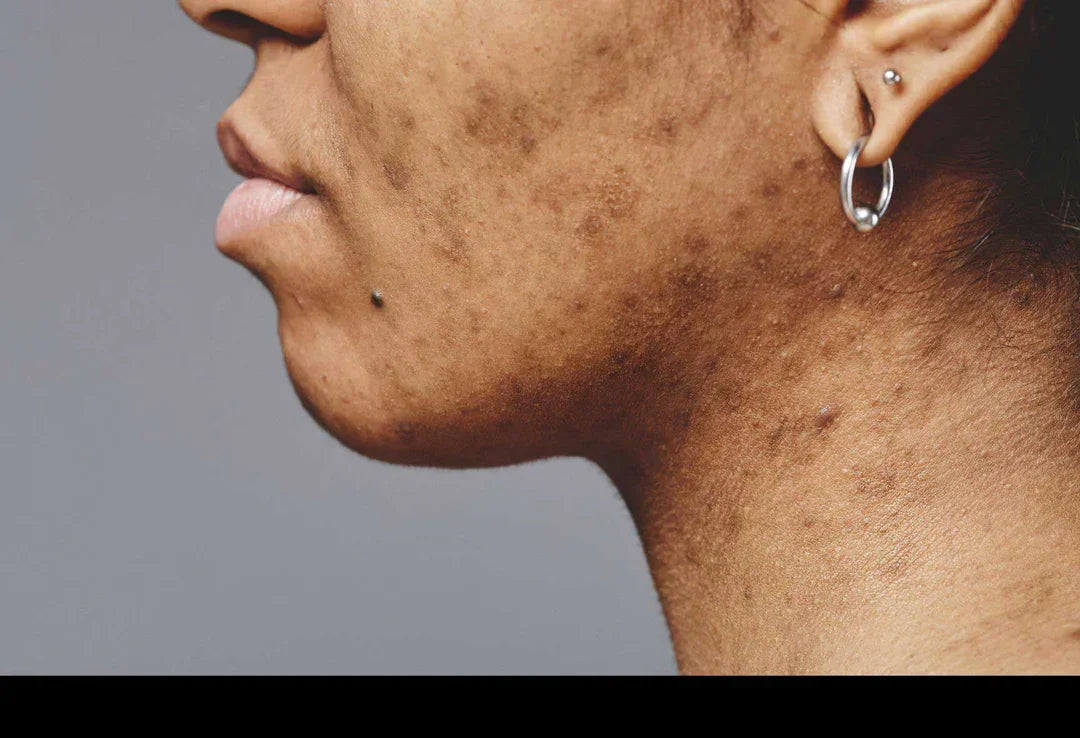
3. Post-inflammatory hyperpigmentation: the biggest risk for Black skin
This is THE main downside of facial peels for Black and mixed-race skin.
When Black skin becomes inflamed, the melanocytes react strongly and produce more melanin. The result: brown or black spots that are darker than your natural skin tone.
A peel can therefore cause:
darkened areas
post-peel dark spots
an uneven skin tone
localized darkening of the skin
This risk is higher if:
the peel is too strong
your skin isn't protected from the sun
you use several exfoliants at the same time
your skin is already sensitive or reactive
👉 That's why Black skin does best with gentle peels: lactic acid, mandelic acid, PHAs, enzyme peels.
4. Dryness and dehydration: an often underestimated downside
A peel can temporarily reduce your skin's ability to hold on to water. Transepidermal water loss increases.
What this can cause:
tightness
rough texture
dry patches
fine dehydration lines
discomfort
This is normal, but it needs to be balanced with intense hydration.
What helps:
hyaluronic acid
glycerin
aloe
panthenol
ceramides
Without the right hydration, your skin takes longer to recover.
5. Photosensitivity: your skin becomes more vulnerable to the sun
A peel makes your skin more sensitive to UV rays, often for several days or more.
Without SPF, this can lead to:
brown spots
darker existing marks
sunburn
premature aging
Even though Black skin doesn't always turn red, it is very sensitive to the sun after a peel.
👉 Broad-spectrum SPF 30 or higher is a must every day, and especially in the days and weeks after a peel.
6. Flaking and peeling: sometimes unsightly
Some people notice:
peeling skin
"crumbs" of dry skin
temporary roughness
This is a normal downside, but it can be embarrassing.
Never:
pull off peeling skin
scratch
rub to speed up the flaking
👉 The direct risk: dark spots.
7. Bad interactions with other active ingredients
Many people layer several strong actives, which increases the risk of irritation.
Combinations to avoid:
peel + retinol
peel + vitamin C (ascorbic acid)
peel + physical scrub
peel + microneedling device
scrub + sauna/steam room
Bad combination → irritation + inflammation + hyperpigmentation.
8. Risk of flare-ups or reactions if your skin is already compromised
If you have:
eczema
dermatitis
rosacea
psoriasis
chemical burns
an active allergy
over-exfoliated skin
A peel can make things worse. Talk to your doctor or dermatologist first.
On flaring areas: 👉 no acids. 👉 only gentle hydration and comfort.
9. Results that can be slow or uneven (the psychological downside)
Another often-forgotten downside: results are not instant, especially on Black skin.
Dark spots: often 4 to 12 weeks to look lighter. Texture: 2 to 4 weeks to look smoother. Skin tone: gradual.
Many people give up too soon or, worse, use stronger peels → things get worse.
10. Over-exfoliation: the most damaging long-term downside
Using peels too often can:
weaken the skin barrier
leave skin "thin" and irritated
cause chronic redness
lead to long-lasting dark spots
disrupt the skin microbiome
Your skin needs a full cycle to renew itself. 👉 For gentle at-home peels, once a week is more than enough; professional peels are spaced further apart, as advised by your practitioner.
How to avoid chemical peel side effects
✔ Choose gentle peels
✔ Space out applications
✔ Always moisturize afterward
✔ Apply SPF 30 or higher
✔ Don't mix several acids
✔ Listen to your skin: if it burns, rinse it off and stop
✔ For Black skin, prefer lactic acid, mandelic acid or PHAs
✔ Always exfoliate in the evening
✔ Avoid touching your skin for the next 48 hours
The bottom line: facial peels work, but they require real know-how
A facial peel is a powerful treatment that can visibly improve your skin when it's used well. But its downsides are real: sensitivity, irritation, dark spots, dehydration, reactions… especially on Black skin.
The key isn't to avoid peels, but to choose:
the right concentration
the right frequency
the right formula
flawless hydration
daily SPF
This combination gives you the best chance of visible results while keeping the risks to a minimum. If you have a skin condition or a darker skin tone and are considering a professional peel, ask a dermatologist experienced with skin of color.
Written by Aissatou, a nurse for more than 10 years and founder of WITH CARE.