Cart
0
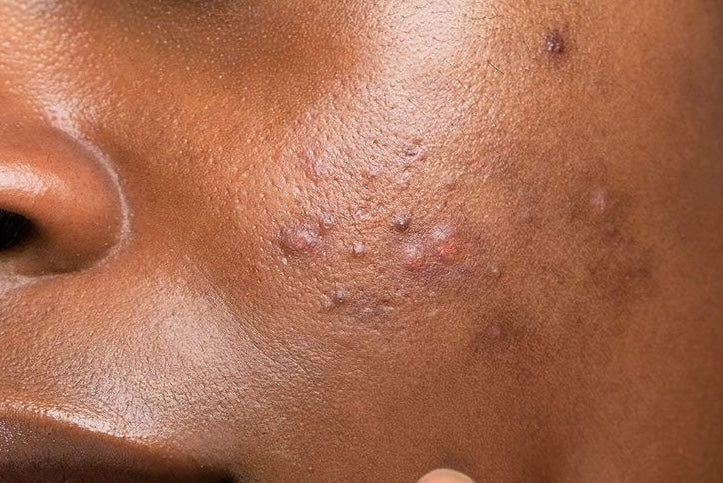
Dark spots on Black skin are one of the most common concerns: a dark mark left behind after a pimple, elbows darker than the rest of your arm, a dark area between your thighs or on your neck… The good news: the vast majority are harmless and can fade. As long as you understand where they come from, because not every spot is handled the same way. As a nurse, I'll walk you through everything, step by step.
Why does Black skin mark more easily?
All skin has roughly the same number of melanocytes, the cells that make melanin. On Black skin, these cells are simply more active and more reactive. At the slightest aggression (inflammation, friction, sun, an irritating product), they produce extra pigment that stays visible as a dark spot.
That is why Black and mixed-race skin must be treated gently: whatever irritates it almost always ends up marking it.
The different types of dark spots on Black skin
1. Post-inflammatory hyperpigmentation (the most common)
This is the mark left after an acne breakout, a bug bite, an ingrown hair, a scratch, an eczema flare-up, or hair removal. It is brown to black, flat, and well defined. It is not a scar: it eventually fades, but this can take from 3 months to more than a year without the right care.
2. Melasma (the “mask of pregnancy”)
Brown, symmetrical patches on the cheeks, forehead, and upper lip. It is triggered by hormones (pregnancy, birth control) and the sun. It is the most stubborn type: it requires patience and medical advice.
3. Friction marks: elbows, knees, underarms, inner thighs
Repeated friction (clothing, shaving, walking) and dryness thicken the skin and stimulate melanin. The result: darker areas that are often rough. They respond well to gentle exfoliation combined with regular moisturizing.
4. Sun spots (lentigines)
Yes, Black skin can also be marked by the sun. UV rays make all other spots worse and keep them from fading.
5. Dermatosis papulosa nigra (small raised spots on the face)
Small raised black or brown dots, often on the cheekbones. They are harmless and common on Black skin, but skincare won't remove them: only a dermatologist can.
When should you see a doctor? Warning signs
Most dark spots are not serious. See a doctor or a dermatologist if:
- a spot changes shape, size, or color, bleeds, or itches for no reason;
- a dark spot or dark band appears on the soles of your feet, the palms of your hands, or under a nail: on Black skin, these are the areas where skin cancers are most often found late;
- the skin on your neck, underarms, or groin becomes dark and velvety: this may be acanthosis nigricans, sometimes linked to blood sugar imbalance, which deserves a checkup;
- spots appear suddenly, in large numbers, or with other symptoms.
How to reduce dark spots on Black skin
Step 1: stop what causes them
Address the cause before the spot: get your acne treated, avoid picking pimples, limit dry shaving, and choose clothes that rub less. As long as the inflammation continues, new spots will keep forming.
Step 2: exfoliate gently
Exfoliation speeds up the shedding of pigment-loaded cells. On Black skin, gentleness is non-negotiable: a scrub that is too abrasive creates new micro-inflammation… and new dark spots. Choose a sugar scrub with fine, melting grains, once or twice a week on the body, or gentle acids (lactic acid, mandelic acid) at low concentrations.
Step 3: use the right ingredients
- Niacinamide (vitamin B3): limits the transfer of pigment to the surface, well tolerated.
- Azelaic acid: helps regulate melanin production, also useful for acne.
- Lactic acid and mandelic acid: exfoliate gently and hydrate, suitable for sensitive skin.
- Vitamin C: an antioxidant that may help reduce the look of dark spots.
Introduce one ingredient at a time and patch test it on a small area. More is not better: irritation would have the opposite effect.
Step 4: moisturize and nourish every day
Dry skin is more fragile, duller, and marks more easily. A body lotion after your shower, then a body butter on your elbows, knees, and friction areas keep skin moisturized and help these areas feel soft and comfortable.
Exfoliate, hydrate, nourish gently
Essential Ritual: a sugar body scrub, a body lotion, and a body butter in the same scent, designed for Black and mixed-race skin. €94.90, free shipping.
Step 5: protect from the sun, even on Black skin
Without sun protection, dark spots get darker and no product can reduce them for good. On your face, daily sunscreen with no white cast is essential, especially if you use acids.
Dark spots by area: my targeted tips
- Face: get acne treated first, never pick pimples, wear sunscreen every day.
- Elbows and knees: gentle weekly exfoliation, then body butter morning and night. Avoid leaning on your elbows.
- Underarms: shave with a new blade, in the direction of hair growth, use an alcohol-free deodorant, and don't exfoliate irritated skin.
- Inner thighs: reduce friction (anti-chafing shorts, soft fabrics) and keep the area well moisturized. If the skin becomes dark and velvety, talk to your doctor.
- Neck: watch out for jewelry and collars that rub. Velvety darkening is a reason to see a doctor.
Mistakes that make dark spots worse
- Scrubbing hard with an exfoliating glove or a coarse scrub.
- Applying lemon juice, baking soda, or vinegar: they are irritating, can burn the skin, and leave even darker spots.
- Using unregulated skin-lightening products: hydroquinone is banned in cosmetics in Europe and is no longer sold over the counter in the US, and products used for skin bleaching can contain corticosteroids or mercury. They thin the skin, cause permanent marks, and pose health risks.
- Switching products every week: it takes at least 8 to 12 weeks to judge a result.
Frequently asked questions
How long does it take for dark spots to go away?
A recent post-inflammatory mark can fade in 2 to 3 months with a suitable routine. An older spot or melasma often takes 6 months or more.
Why do I have dark spots on my body?
Most often because of past inflammation (pimples, ingrown hairs, bug bites, eczema) or repeated friction. Dry skin makes it worse.
Can dark spots on Black skin be dangerous?
Rarely, but a spot that changes, bleeds, or appears on the soles of the feet, the palms of the hands, or under a nail should be shown to a doctor.
Does exfoliating make dark spots disappear?
It helps, if it's gentle and regular. Harsh scrubbing does the opposite and creates new spots.
What's the difference between a dark spot and hyperpigmentation?
They're the same thing: hyperpigmentation is the medical term for any area where the skin produces too much melanin.
In short
On Black skin, dark spots are easier to prevent than to correct: limit inflammation, exfoliate gently, moisturize every day, and protect from the sun. With consistency, most spots fade noticeably within a few months. To build a complete routine, discover our body care routine for Black and mixed-race skin.
Written by Aissatou, a nurse for more than 10 years and founder of WITH CARE.