


Cart
0
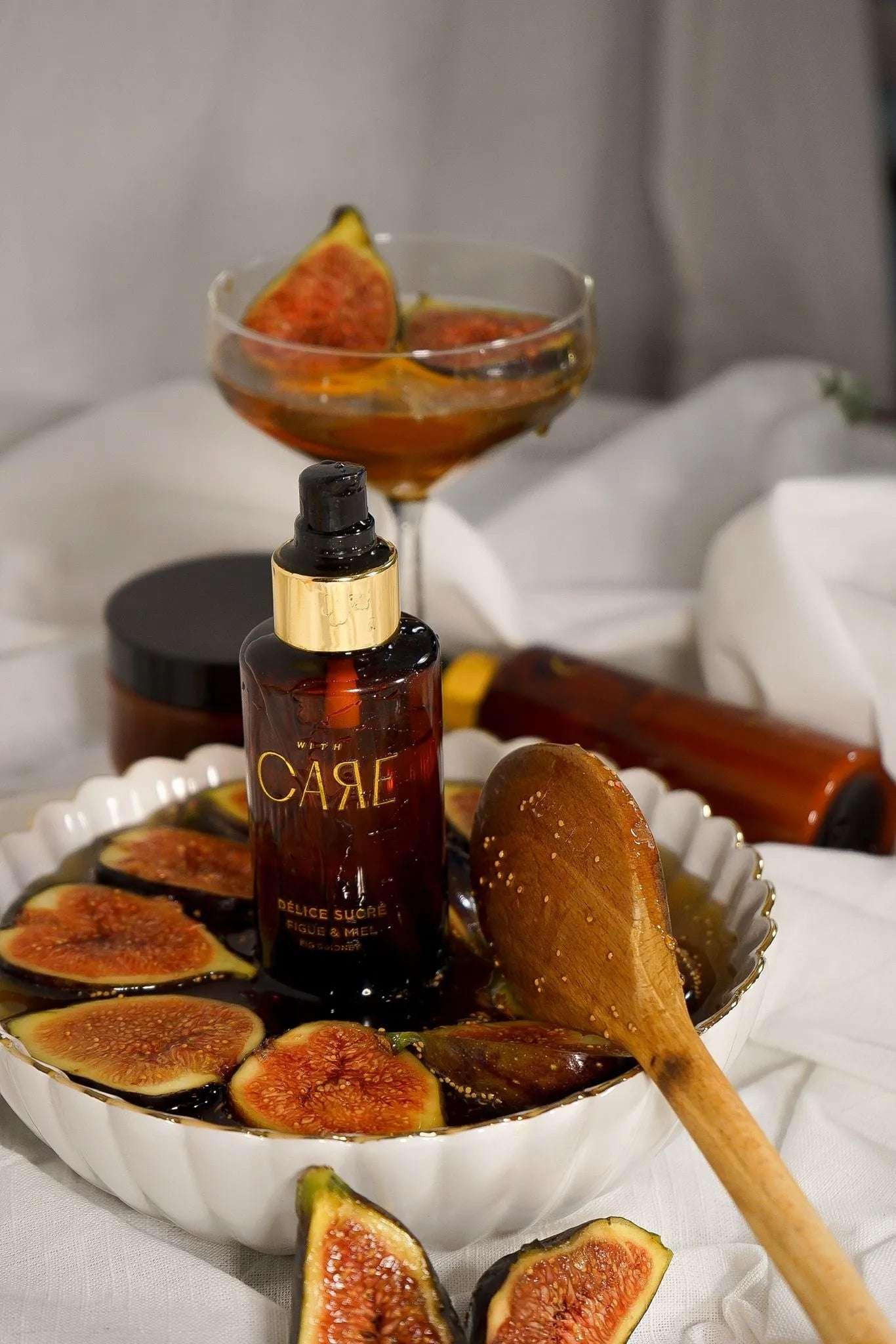

If you have black or mixed skin, you know how much of a daily battle dryness can be. Tightness, dull skin, ashy patches, legs that turn white after the shower, rough elbows… and sometimes, even with a good cream, nothing seems to be enough.
It's no coincidence: black skin has very specific needs, and not every oil is a good fit. Chosen and applied the right way, an oil for very dry skin can really change how your skin feels: more supple, more comfortable, with a more radiant look.
That's one of the reasons brands focused on these skin types, like WITH CARE, put specific oils such as grape seed oil at the heart of their products, to offer nourishment that truly respects the needs of black skin.
Let's look at which oils really work, and how to use them.
Why is black skin often very dry?
Black skin:
Can lose water more quickly
May contain fewer protective ceramides
Looks dull when the skin barrier is weakened
Turns ashy (gray, whitish) when it's dry
Doesn't handle hot showers and harsh shower gels well
So it's skin that needs water + lipids + protection.
Oils play a key role, as long as you choose the right ones. To understand all the causes of this dryness and the full routine that goes with it, read our guide dry black skin: causes and a routine for lasting hydration.
The best oils to moisturize very dry black skin
1. Grape seed oil: the lightest and easiest to use
Light, fast-absorbing and comfortable: an ideal everyday oil for black skin.
It:
absorbs quickly, without a greasy film,
leaves skin feeling supple,
gives skin a radiant, satin-like look,
helps maintain the skin barrier thanks to its high linoleic acid content,
leaves tight-feeling skin comfortable,
reduces the ashy look.
It's a star oil in high-end skin care… and the one WITH CARE uses in its body oil (grape seed oil + vitamin E), for a simple reason: it's light and suits most skin types, including sensitive skin.
2. Shea butter: the most nourishing
Rich, protective and comforting.
A must for very dry skin:
deeply nourishes
helps support the skin barrier
helps protect against the cold
softens rough areas
Ideal at night or in winter.
3. Sweet almond oil: the most soothing
It quickly comforts:
tight-feeling skin,
rough areas,
light flaking,
persistent dryness.
Great for dry, atopic-prone or reactive skin. Avoid it if you have a tree nut allergy, and patch test first if your skin is sensitive.
4. Coconut oil: the most occlusive (use with care)
It holds in moisture very well, but should be used:
on damp skin
at the end of your routine
in small amounts
It shouldn't replace your moisturizer; use it as the last step to seal everything in. Because it's comedogenic, avoid it on breakout-prone areas (back, chest, face).
5. Avocado oil: the richest and thickest
Perfect for:
very dry legs
rough areas
skin that cracks in winter
Very nourishing, thick and protective, rich in fatty acids (especially oleic acid).

Which oil should you choose for your needs?
Need |
Best oil |
Very dry skin |
Grape seed + shea |
Dull-looking skin |
Grape seed or avocado |
Dry, rough elbows and knees |
Sweet almond + shea |
Sensitive skin |
Jojoba or sweet almond |
Dry skin with keratosis pilaris |
Grape seed (lightweight) |
Ashy skin |
Grape seed |
The secret: oil alone is never enough
A very common mistake: using only an oil to moisturize.
It isn't enough.
Oil nourishes, but it doesn't hydrate. It doesn't add water: it slows down its evaporation. Black skin needs:
Hydration (body lotion)
Nourishment (oil or butter)
Protection (a lipid layer)
That's what WITH CARE offers: a complete routine that first brings water (body lotion), then seals it in with a plant oil. Not sure whether your skin is dry or dehydrated? Our article dry skin vs. dehydrated skin: what's the difference? will help you figure it out.
How to apply oil on very dry black skin
How you apply it matters as much as which oil you choose. Here are the right steps:
On skin that's still damp. After your shower, pat your skin with a towel without rubbing, then apply your products within 3 minutes. The oil then traps the water still on the surface.
After the lotion, not before. Apply a hydrating body lotion first (the water), then the oil (the protective layer). On very dry areas, you can finish with a butter.
In small amounts. A few drops warmed between your palms are enough for one leg. Too much oil leaves a greasy film without adding more hydration.
Massaging the areas that show it most. Shins, elbows, knees, heels and the backs of the hands are often the first to look ashy.
With a short, lukewarm shower. Very hot water and foaming shower gels strip away the lipid layer: no oil can make up for a scalding shower every day.
If you like an oil that also scents your skin, find out how to use one every day in our article on scented body oil.
A complete routine for very dry black skin
In the morning
Gentle, sulfate-free shower gel
Grape seed or sweet almond oil
SPF on exposed areas
In the evening
Shower
Hydrating body lotion
Shea butter body butter
Once or twice a week:
Gentle body scrub (not abrasive!), less often if your skin is irritated
When to see a doctor
Very dry skin is common and can usually be managed with a good routine. However, see a doctor or dermatologist if:
the itching is intense or wakes you up at night,
thick, red or darker patches appear, or patches that ooze or are very inflamed (a possible sign of eczema),
cracks bleed or get infected,
the dryness comes on suddenly, comes with other symptoms (fatigue, hair loss, weight gain or loss) or doesn't improve after 2 to 3 weeks of regular care.
Frequently asked questions
What is the best oil for very dry skin?
There isn't one single "best" oil, but there is a great duo: a lightweight oil like grape seed oil for every day, and shea butter for very dry areas or at night. The key is to apply them on hydrated, damp skin, after a body lotion.
Which oil is best for very dry, sensitive black skin?
Choose a simple oil with few ingredients: grape seed, jojoba or sweet almond (unless you have a tree nut allergy). Avoid applying undiluted essential oils directly to your skin, and patch test any new product on a small area for 48 hours.
Can you use oil on black skin every day?
Yes. On very dry black skin, applying it every day after your shower is actually recommended. Just adjust the texture: a light oil in the morning, a richer texture (butter) at night or in winter.
Oil or cream: which is better for dry black skin?
They work together. The lotion or cream brings water and humectants like glycerin; the oil then slows down the evaporation of that water. Used alone on dry skin, an oil usually isn't enough to get rid of the ashy look.
Conclusion
Very dry black skin needs the right care, and not all oils are equal. The best options remain:
grape seed oil
sweet almond oil
avocado oil
Used in the right routine, they leave skin feeling more supple and softer, and looking more radiant.
That's exactly why WITH CARE builds its body care around plant oils suited to black skin, like grape seed oil: lightweight, pleasant and well suited to dry skin.
Written by Aissatou, a nurse for more than 10 years and founder of WITH CARE.


