Cart
0

Dry vs dehydrated skin: your skin feels tight after the shower. It flakes in places, feels tight all the time, and looks dull. You tell yourself you have dry skin. But is that really the case? Not necessarily. Dry skin and dehydrated skin are two very different things, and mixing them up means you risk treating the wrong problem with the wrong product.
As a nurse and the founder of WITH CARE, this is a confusion I see very often. Let me explain it simply.
Dry skin: a skin type, not a passing condition
Dry skin is a skin type. That means you are born with it, or it develops gradually with age. It is linked to a lack of lipids, the natural fats your skin produces to form its hydrolipidic film, that protective layer on the surface.
Dry skin naturally produces little sebum. It is therefore less protected against external stressors like cold, wind, and harsh chemicals. It is often rough in texture, feels tight frequently, tends to flake, and sometimes itches.
On Black and mixed-race skin, dryness can create an ashy or dull look, that “grayish film” many people recognize on their elbows, knees, or legs in winter.
Dry skin is cared for with nourishing, lipid-rich ingredients: shea butter, plant oils, ceramides. The goal is to make up for the lack of natural oils.
Dehydrated skin: skin that lacks water, not oil
Dehydrated skin is not a skin type. It is a temporary state that can affect any skin type, including oily skin. Oily skin can be dehydrated. This is one of the most common mix-ups.
Skin dehydration is linked to a lack of water in the upper layers of the epidermis. It can be caused by long sun exposure or indoor heating, overly harsh products, stress, fatigue, seasonal changes, and sometimes by not drinking enough water.
One simple clue: if you gently pinch the skin on your cheek or forearm and it forms tiny fine lines, or your skin feels tight even though it looks oily, it is likely lacking water. This is just a home clue, not a medical test.
Dehydrated skin is cared for with humectant ingredients: hyaluronic acid, glycerin, aloe vera. These molecules attract and hold water in the epidermis.
What if you have both?
It is possible, and even common on Black and mixed-race skin exposed to dry environments or unsuitable routines. Skin that is both dry and dehydrated lacks both lipids and water. It is especially fragile and reactive.
In that case, your routine should combine both types of ingredients: humectants for water, and occlusive, nourishing ingredients for oil.
How to figure out which one you have
Here are a few simple questions to help you.
Has your skin always been uncomfortable, even in summer and even when you drink plenty of water? It is probably a dry skin type.
Did your discomfort appear recently, after a trip, a change of season, a stressful period, or a new product? It is more likely temporary dehydration.
Is your skin oily in the T-zone but uncomfortable on your cheeks or arms? That is dehydrated combination skin, the most common and least understood case.
Do your legs look ashy in winter but go back to normal in summer with a good cream? That is seasonal dry skin with a tendency to dehydration.
The right WITH CARE routine for each situation
For dry skin, the priority is nourishment. WITH CARE body butter, made with shea butter and cocoa butter, nourishes the skin and helps limit moisture loss. Apply it to slightly damp skin after the shower to help it absorb.
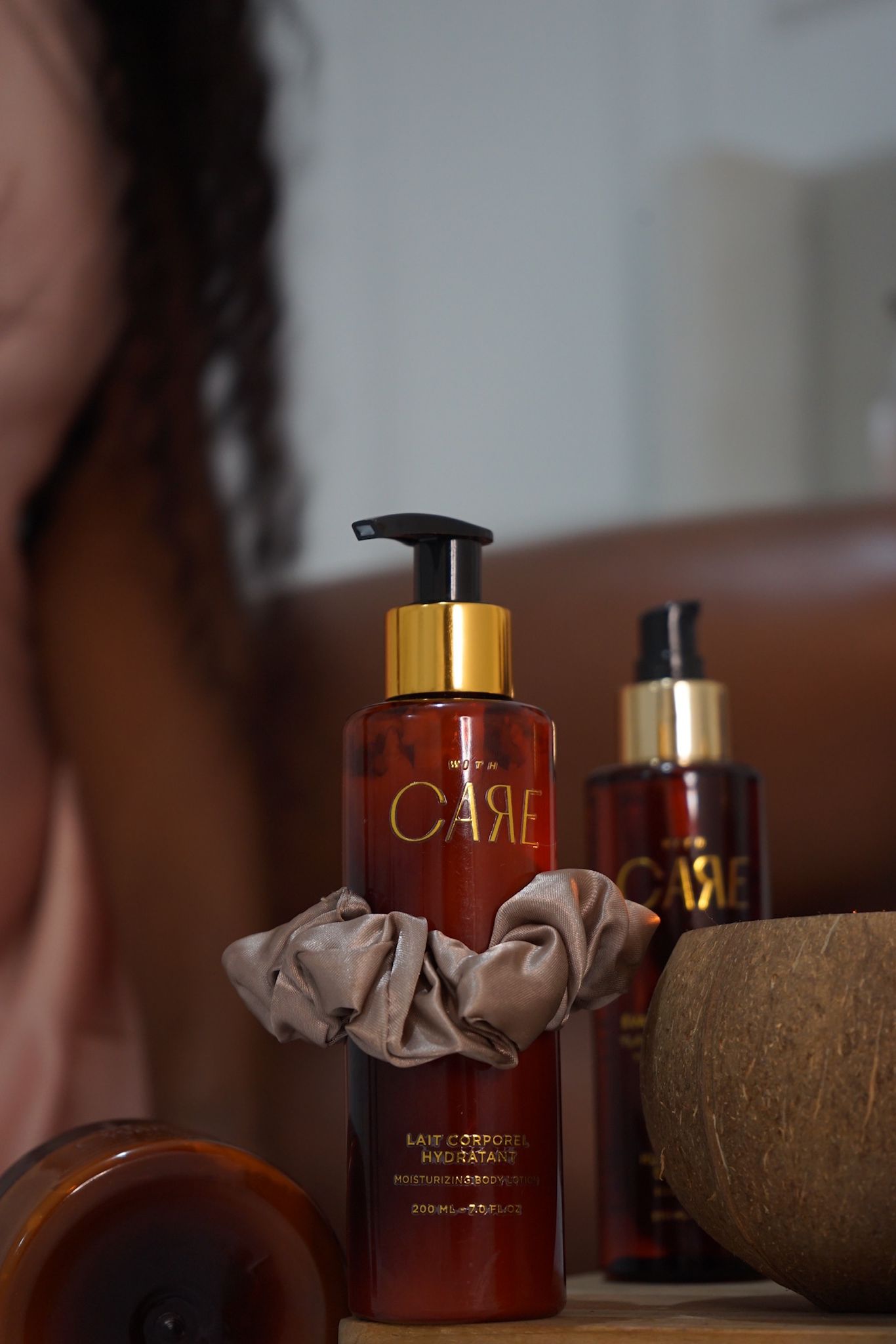
For dehydrated skin, the priority is hydration. WITH CARE body lotion contains glycerin, a humectant that attracts and holds water in the skin, combined with lactic acid and grape seed oil. Its light texture absorbs quickly and is suitable for daily use, morning and night if needed.
For skin that is both dry and dehydrated, combine the two. Body lotion first for hydration, then body butter to seal it in and nourish. WITH CARE hydrating body mist can be used during the day for a quick hydration boost without having to get undressed.
In every case, regular exfoliation, once or twice a week with the WITH CARE sugar body scrub, is essential. Dead skin cells that build up on the surface can keep moisturizing and nourishing products from absorbing well. A gentle scrub removes them and helps your whole routine work better.
Common mistakes to fix
Using a body oil alone on dehydrated skin doesn't solve the problem. Oil nourishes and protects but doesn't hydrate, since it contains no water. On dehydrated skin, oil alone can even add to the discomfort by sealing in skin that still lacks water.
Taking very hot showers makes dry skin worse. Hot water strips away the skin's natural hydrolipidic film. Choose lukewarm water and apply your moisturizer within three minutes of your shower, while your skin is still slightly damp.
Neglecting overall hydration. Drinking enough water is part of general good health, especially when the heating is on or in hot weather, even though it is not enough on its own to moisturize the skin: topical care remains essential.
In short
Dry skin = lack of lipids → nourishing care, butters, oils. Dehydrated skin = lack of water → humectant care, glycerin, body lotion. The two can coexist, especially on Black and mixed-race skin.
The right routine is the one that meets what your skin is really going through, not a generic formula designed for a “standard” skin that isn't yours. If your skin stays very dry, itchy, or cracked despite a good routine, talk to a doctor or a dermatologist.
Not sure about your routine? Write to me for personalized advice.