


Cart
0
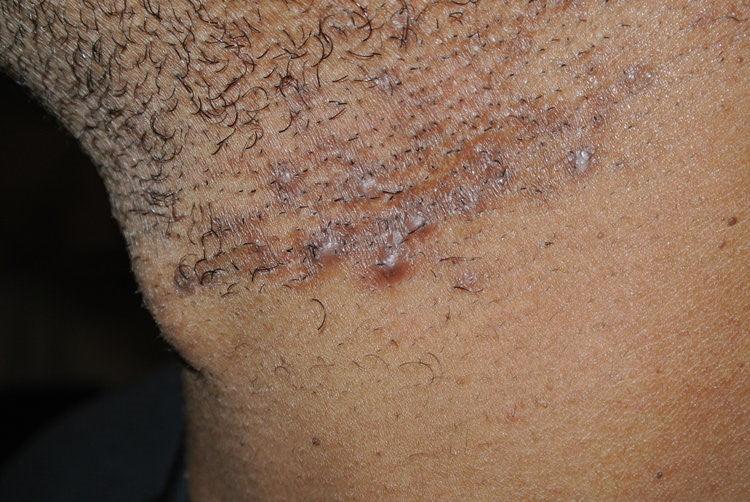
Ingrown hairs are very common on Black and mixed-race skin. They show up after shaving, waxing, friction or inflammation of the hair follicle.
The result: bumps under the skin, rough patches, sometimes dark marks and, in some cases, persistent folliculitis. If your rough little bumps aren't linked to shaving, it may be something else: read my guide to keratosis pilaris on Black skin.
The question I hear most often is: What causes ingrown hairs on Black skin?
To answer it, you need to understand how the hair is shaped, how sensitive Black skin can be, and which everyday habits make the problem worse.

Why are ingrown hairs more common on Black skin?
The main reason comes down to the natural shape of the hair.
Naturally curly or curved hair
People with Black skin often have hair that is:
- thicker
- curlier
- more curved
- tightly coiled
As it grows back, the hair doesn't always come straight out of the skin: it curls back and can grow into the skin, which creates an ingrown hair.
Skin that is more prone to inflammation
Black skin tends to react strongly to:
- irritation
- tiny nicks from shaving
- friction
- harsh products
This inflammation can trigger excess melanin production, which is why post-inflammatory hyperpigmentation (dark marks) often appears after an ingrown hair.
A sometimes thicker skin texture
Some Black skin has a denser outer layer (stratum corneum), which can make it harder for the hair to break through the surface as it grows back.
Shaving too often
Shaving cuts the hair cleanly, often at an angle, which makes it even more likely to curl back under the skin.
The areas most affected by ingrown hairs on Black skin
- Legs
- Bikini line
- Underarms
- Beard/chin area (for men)
- Thighs
- Buttocks
- Under the breasts (bra friction)
Any area that is shaved or exposed to friction is vulnerable. On the bikini line and inner thighs, repeated rubbing can also leave the skin darker: I explain why in my article on dark inner thighs on Black skin.
How to recognize an ingrown hair
Common signs include:
- a pimple or bump under the skin
- a dark dot or hair visible under the skin
- a hard or rough area
- pain or tenderness
- redness
- dark marks once the bump has gone
- a risk of folliculitis if it becomes infected
On Black skin, an ingrown hair very often leaves long-lasting hyperpigmentation if you pick at it.
An ingrown hair can look like folliculitis (inflammation of several follicles, often as small clustered bumps). To tell them apart, read folliculitis or ingrown hairs: how to tell the difference.

Common causes of ingrown hairs on Black skin
Dry shaving or shaving too often: the razor creates tiny cuts and increases the risk.
Incorrect waxing (wax that's too hot, sharp pulls): hairs that break instead of being pulled out from the root can grow back under the skin.
Friction: tight clothing, synthetic underwear, bike shorts that rub.
Dead skin cell buildup: it blocks the hair's way out and creates a "barrier" that forces it to curl back.
Not exfoliating: skin that isn't exfoliated makes it easier for hairs to get trapped.
Not enough moisture: dry skin is less supple, which makes it harder for the hair to come through.
Picking at bumps: touching, scratching or squeezing worsens inflammation and leaves dark marks.
How to help prevent ingrown hairs on Black skin
Prevention comes down to three essential habits: exfoliate, moisturize, shave the right way.
Regular exfoliation
It removes the dead skin cells that block the hair's way out.
The best exfoliants for Black skin:
- sugar body scrubs
- gentle AHAs (lactic acid)
- BHAs (salicylic acid)
- enzyme exfoliants
How often: once or twice a week, without scrubbing hard. To choose the right method, see our body scrub guide for Black and mixed-race skin.
Generous moisturizing
Supple skin makes it easier for the hair to come through the surface.
Look for:
- plant oils (sweet almond, jojoba, grape seed)
- body butters (shea, cocoa)
- glycerin-rich moisturizers
Gentle shaving and the right technique
- always use a shaving gel or cream
- never dry shave
- shave in the direction of hair growth
- don't go over the same spot several times
- change your blade regularly
Razor, wax, depilatory cream or laser: each method has its pros and risks on darker skin. I compare them in hair removal on Black skin: razor, wax and laser without dark marks or bumps.
The right clothing
Choose cotton underwear and avoid clothes that are too tight.
Never pick at an ingrown hair
Picking can lead to inflammation, infection and hyperpigmentation.
How to care for existing ingrown hairs on Black skin
When ingrown hairs are already there:
Use a gentle exfoliant
AHAs/BHAs help clear the surface of the skin so the hair can come out.
Use a soothing product
Niacinamide, aloe vera or calendula help soothe the skin.
Ask for advice about dark marks
To help limit hyperpigmentation and fade the look of existing marks, these ingredients are often recommended (ideally with advice from a dermatologist or pharmacist):
- azelaic acid
- vitamin C
- niacinamide
- kojic acid
Moisturize the area every day
A product rich in lipids and humectants helps keep skin supple.
For severe or chronic cases
Multiple, painful or infected ingrown hairs: see a dermatologist. Medical treatment may be needed (topical antibiotics, stronger BHA lotions, laser hair removal), based on your doctor's advice.
Ingrown hairs: what to do and how to remove them without damaging your skin
When you can see an ingrown hair, it's tempting to dig it out. On Black skin, though, that's the habit most likely to leave marks. Here's what to do instead:
- Stop shaving or waxing the area for a few days so the swelling can go down.
- Apply a warm compress for 5 to 10 minutes, 2 to 3 times a day: the warmth softens the skin and helps the hair rise to the surface.
- Exfoliate gently once or twice a week, without scrubbing.
- If the loop of the hair is clearly visible at the surface, you can gently lift it with clean, disinfected tweezers, without digging into the skin or pulling the hair out.
- Moisturize every day to keep the skin supple.
If the hair is deep, don't try to reach it: let your skin do its work or ask a healthcare professional for advice.
When should you see a doctor for an ingrown hair?
See a doctor or dermatologist if you notice:
- a bump that grows, feels warm, is very painful or fills with pus (possible abscess)
- redness spreading around the bump
- a fever
- ingrown hairs that keep coming back in the same spot, or raised scars
Never try to drain an abscess yourself: it may need medical care.
Mistakes that make ingrown hairs worse
- shaving against the direction of hair growth
- using a dull blade
- scrubbing your skin aggressively
- exfoliating too often
- digging the hair out with a needle
- squeezing the bump
- damaging the skin while searching for the hair
- using irritating deodorants after shaving
- shaving every day
On Black skin, any inflammation can mean a dark mark.

How long before you see an improvement?
- 1 week: hairs come through more easily
- 2 to 4 weeks: fewer bumps, less discomfort
- 1 to 3 months: dark marks gradually fade
- 3 to 6 months: smoother, more regular-looking skin
These timelines vary from person to person. Consistency is key.
Frequently asked questions
Do ingrown hairs go away on their own?
Yes, most of the time. If you stop shaving the area, exfoliate gently and moisturize, the hair often comes out on its own within a few days to a few weeks. On Black skin, the dark mark it leaves behind can take several months to fade.
How do you get rid of an ingrown hair on the bikini line?
The skin on the bikini line is thin and there's a lot of friction. Take a break from shaving, apply a warm compress, wear loose cotton underwear and exfoliate very gently. Never dig into the skin: if the bump is painful or has pus, see a doctor.
What should you do about an infected ingrown hair or an abscess?
Don't squeeze it. Wash the area with water and a mild soap, apply a warm compress and let it breathe. If the bump grows, feels warm, becomes very painful, or you have a fever, see a doctor promptly.
What kind of scrub helps with ingrown hairs?
A gentle scrub used once or twice a week helps remove the dead skin cells that block the hair's way out. A sugar scrub or an AHA-based exfoliant works for most skin types. Avoid harsh grains and never exfoliate irritated or infected skin.
The bottom line
Ingrown hairs are common on Black skin for a simple reason: the curly structure of the hair combined with skin that is prone to inflammation. But with the right routine (regular exfoliation, generous moisturizing, gentle shaving techniques and soothing care), you can absolutely help prevent them and care for them well.
Smooth, comfortable, soothed skin is within reach once you adopt the right habits, without being harsh on your skin and while respecting its natural rhythm.
Not sure which routine suits your skin? Write to me for personalized advice.
Written by Aissatou, a nurse for more than 10 years and founder of WITH CARE.


