


Cart
0
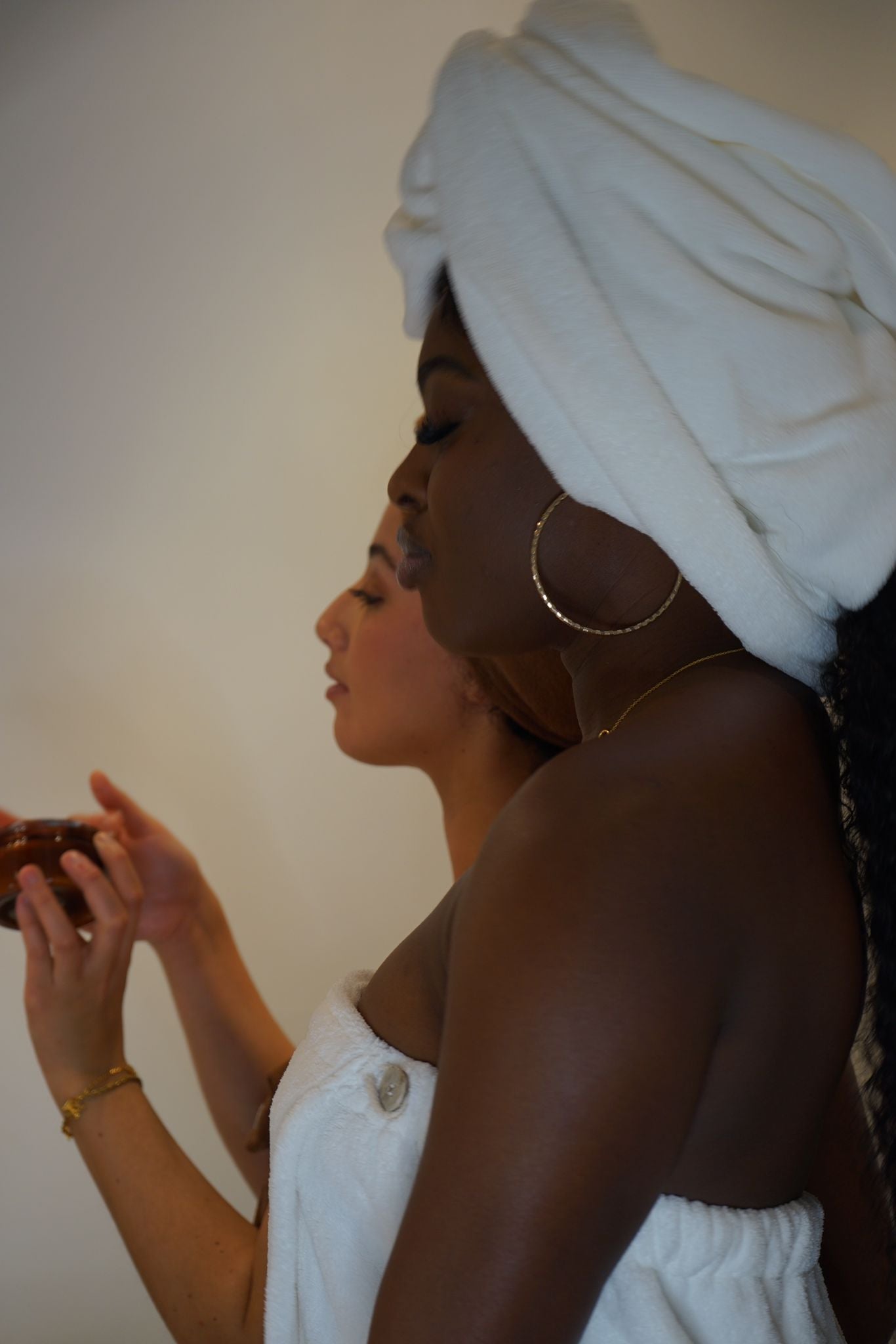

Skin peeling after a shower is very common, especially if you have dry skin. It's often misunderstood and wrongly blamed on a lack of care. In reality, it's a sign that your skin barrier is out of balance, often made worse by your washing habits.
Why does skin peel after a shower?
Hot water may feel comforting, but it weakens the skin's protective lipid film. Combined with harsh cleansers, it strips away the skin's natural oils, leaving it vulnerable and dehydrated. Once you step out of the shower, water evaporates quickly, causing that visible flaking.
Several habits, often combined, keep this going:
- Water that's too hot and long showers: the longer the shower, the more of the skin's protective lipids get washed away.
- Very foamy body washes or high-pH soaps: they clean well, but they also strip the protective film, especially when used all over the body every day.
- Hard water: limescale can leave a residue on the skin and make it feel even tighter. To understand how this works, read our article on how hard water affects your skin.
- Friction: exfoliating gloves, rough sponges or vigorous towel-drying weaken skin that's already dry.
- Cold weather and indoor heating: in winter, dry air speeds up the evaporation of water from the skin.
On Black and mixed-race skin, these small flakes are more visible: they give the skin a grayish or "ashy" look, especially on the legs, arms, elbows and knees. It's not a sign of being unclean, it's a sign of dryness.
Skin peeling for no reason: is there really no cause?
When skin peels "for no reason," the cause is usually dry skin that has built up gradually: a change of season, a new body wash, more frequent showers, sports, chlorinated pools, or simply skipping moisturizer for a few weeks. Skin renews itself constantly, and when it lacks water and lipids, dead cells come off as visible flakes instead of shedding unnoticed.
Some situations do call for medical advice, though: peeling that appears suddenly over a large area, comes with other symptoms, or starts after taking a new medication should be reported to a doctor.
What to do when your skin peels after a shower
To fix it, you need to act on several levels. Keep the water warm rather than hot, and choose your cleansers carefully. Right after your shower, applying a body lotion helps replenish lost moisture.
Then lock in that moisture with a body butter or a scented body oil to help limit water loss. Consistency is key: applying it every day helps your skin find its balance again, little by little.
In the shower
- Choose lukewarm rather than hot water, and keep showers to 5 to 10 minutes.
- Use a gentle cleanser without harsh fragrance, mainly on the areas that need it (underarms, skin folds, feet).
- Wash with your hands rather than a rough washcloth.
Right after the shower
- Pat your skin dry with a towel instead of rubbing.
- Apply body lotion while your skin is still slightly damp, within a few minutes of stepping out. WITH CARE body lotions combine glycerin, lactic acid and grapeseed oil.
- On the driest areas (shins, elbows, knees, heels), add a thin layer of body butter made with shea butter and cocoa butter to help limit water loss.
If your skin is irritated, red or cracked, choose fragrance-free products until it feels comfortable again, and avoid anything that stings when applied.
Should you exfoliate peeling skin?
It's tempting to try to "remove" the dead skin, but exfoliating too often weakens the skin barrier even more. On peeling skin with no irritation, a gentle scrub once a week is plenty, always followed by moisturizer. On red, irritated or cracked skin, it's best to skip it and let the skin calm down first.
With the right habits, skin stops peeling, feels more comfortable and supple, and becomes visibly softer.
When to see a doctor
Skin peeling after a shower is usually harmless. However, it's important to see a doctor or dermatologist if:
- the peeling comes with intense itching, redness or well-defined patches;
- the skin oozes, bleeds, crusts over or develops painful cracks;
- the patches are thick, with white or silvery scales;
- skin peels between the toes or on the soles of the feet with an odor or itching, which may point to a fungal infection;
- the peeling appears suddenly, spreads, or comes with fever or unusual fatigue;
- nothing improves after two to three weeks of good habits.
These signs may point to eczema, psoriasis, an infection or another condition that needs a diagnosis and, if necessary, prescribed treatment. If showering mostly leaves you itchy, you can also read our article on itchy skin after a shower.
Frequently asked questions
Why is my skin peeling even though I moisturize?
The product often isn't the problem: it's washing habits that undo your moisturizing every day. Water that's too hot, a stripping body wash, or applying lotion long after your shower all limit results. Timing matters too: on slightly damp skin, moisture is better retained.
How long does it take for skin to stop peeling?
With a consistent routine (lukewarm showers, gentle cleanser, daily moisturizing), improvement is often visible within one to two weeks. It can take a few more weeks for skin to feel fully comfortable, because the outer layer of the skin renews gradually.
How do you get rid of peeling skin?
Don't pull off the flakes: it can cause small wounds and, on Black and mixed-race skin, leave darker marks. Instead, moisturize morning and night to soften the skin, and save a gentle scrub for non-irritated skin, no more than once a week.
Is there a home remedy for peeling skin?
A simple plant oil applied to damp skin can help limit dryness. However, it's best to avoid lemon, undiluted vinegar or baking soda on peeling skin: they can irritate it further. And if the peeling persists, seeing a doctor is still the best option.
Not sure about your routine or your skin? Write to me for personalized advice.
Written by Aissatou, a nurse for more than 10 years and founder of WITH CARE.


