


Cart
1
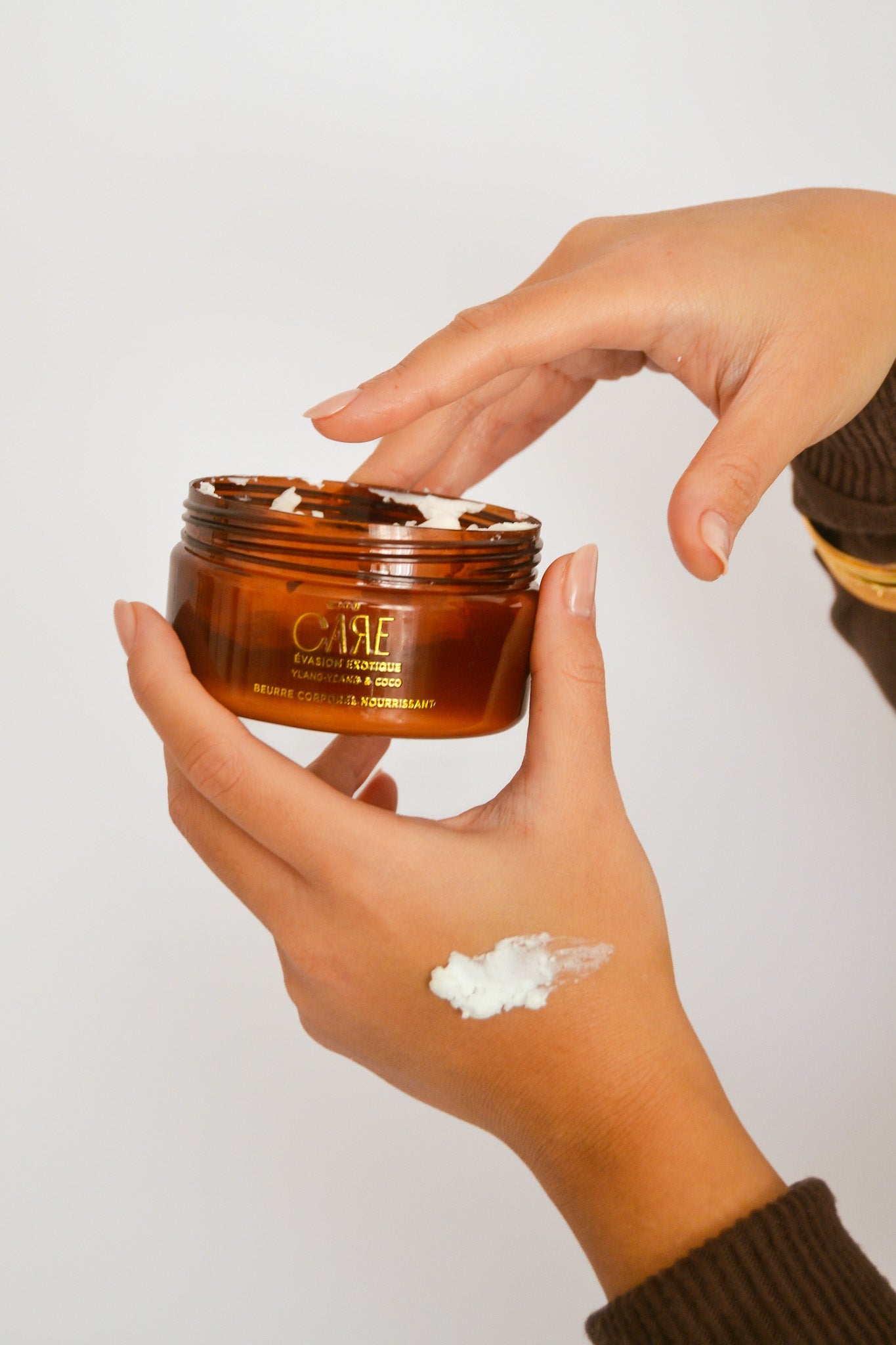

Body butter vs body oil: when you want to nourish your skin, this question comes up often. Which one should you choose?
These two products have different textures and uses, but they can also complement each other in a well-thought-out body care routine.
As a nurse for more than 10 years, I'll explain what really sets body butter apart from body oil, how to choose based on your skin (especially if it is Black or mixed-race, dry and sensitive), and how to use each one at the right time.
Body butter vs body oil: what's the difference?
The first difference is texture. Body butter is made of fats that are solid at room temperature, such as shea butter or cocoa butter: it melts on contact with the skin and leaves a more noticeable protective film. Body oil is liquid: it spreads easily, absorbs faster and leaves a lighter finish.
What they have in common: both are nourishing products. They don't add water to the skin; they provide lipids that soften it and limit the evaporation of the water it already holds. That's why they work best on skin that is still slightly damp, or after a hydrating product.
| Criteria | Body butter | Body oil |
|---|---|---|
| Texture | Rich, melting | Fluid, light |
| Finish | More noticeable protective film | Satiny feel, absorbs quickly |
| Best for | Very dry skin, rough areas | Normal to dry skin, everyday use |
| Best time | Evening, cold season | After the shower, morning or warm season |
Body butter: intense nourishment
Body butter is a rich product, ideal when your skin:
is very dry
feels tight
feels rough
lacks long-lasting comfort
It is especially well suited to dry areas like elbows, knees, and legs.
So what does body butter actually do? It nourishes the skin and helps it stay comfortable for longer, which is welcome in winter, after exposure to cold or wind, or on areas that quickly look dry, like shins and heels. WITH CARE body butters combine shea butter and cocoa butter for a melting texture you warm between your hands before applying.
Body oil: suppleness and comfort
Body oil nourishes the skin while bringing:
suppleness
a satiny feel
better retention of moisture
It is often lighter and easier to use every day.
Oil is a good fit if you don't like the feel of a thick product, for your morning routine and for warm seasons. WITH CARE scented body oils are made with grapeseed oil and vitamin E: a light texture that absorbs quickly and gently scents the skin. To learn more, read our article Body oil: benefits, how to use it and how to choose it.
Black or mixed-race, dry and sensitive skin: which one to choose?
On Black or mixed-race skin, a lack of lipids often shows quickly: the skin looks gray or ashy, especially on the legs, elbows and knees. A few simple guidelines:
Very dry skin that feels tight or flakes: go for body butter, at least in the evening and on dry areas.
Normal to dry skin, hot or humid climate: body oil is often enough for daily use.
Sensitive skin: choose a short ingredient list, patch test on a small area (inside of the elbow) for 48 hours first, and stop if you notice redness or itching, since fragrance can bother some reactive skin.
To learn more about this rich product, see our article Body butter for Black skin: why and how to use it.
Body butter or body oil: do you really have to choose?
Not necessarily.
A balanced routine can include:
a scented body oil after your shower
a body butter on very dry areas or at night
How to use body butter and body oil in your routine
After a short, lukewarm shower, pat your skin with a towel without rubbing: it should stay slightly damp.
If your skin is dehydrated, start with a body lotion: WITH CARE body lotions contain glycerin, lactic acid and grapeseed oil.
Then apply the oil all over your body, massaging gently until absorbed.
Finish with the butter on the driest areas (elbows, knees, shins, heels), warming it between your palms first. A small amount is enough.
These steps are explained in detail in our article After-shower body routine: the steps that make all the difference.
Frequently asked questions
When should you apply body butter?
The best time is right after a shower or bath, on skin that is still slightly damp, or in the evening before bed: the rich texture has time to work without getting in the way of getting dressed. In winter, daily application on dry areas is often needed.
Can you use body oil and body butter together?
Yes. Apply the lighter texture (the oil) first, then the butter, only on the areas that need it. You can also alternate: oil in the morning, butter at night.
Do you rinse off body butter?
No, it is a leave-on product. Apply a thin layer and massage until it melts in. If your skin still feels greasy, you used too much.
Body butter, body oil or body lotion: what's the difference?
Body lotion is an emulsion that contains water and hydrating ingredients such as glycerin: it hydrates and feels light, ideal for dehydrated skin or hot weather. Oil and butter nourish and protect. So the three don't do the same thing: on dry, dehydrated skin, applying a lotion followed by an oil or butter often gives the most comfort.
Can you use body butter on your face?
It's not recommended for regular use. Facial skin is thinner and more prone to breakouts, and cocoa butter is considered comedogenic. Keep body butter for your body and choose a product designed for the face.
What if my skin stays dry despite my routine?
Dryness that lasts several weeks despite a suitable routine, intense itching that wakes you up at night, thick, oozing or spreading patches, or cracks that bleed are reasons to see a doctor or dermatologist: it could be eczema, psoriasis or another condition that needs medical advice.
Conclusion
Body butter and body oil are not rivals. Used well, they meet different needs and complement each other perfectly. To fit them into your daily steps, follow my body care routine for Black and mixed-race skin.
Not sure which one suits your skin? Write to me for personalized advice.
Written by Aissatou, a nurse for more than 10 years and founder of WITH CARE.


